KBS SIDHU DELIVERS “GURU KI NAGRI” LECTURE AT GNDU; VICE-CHANCELLOR PROF. KARAMJEET SINGH HAILS THE CITY’S RESILIENCE AND CHARDI KALA
Face2News/Amritsar
The people of Amritsar should come together in a citizens’ self-help group, above party lines and joined by the city’s professional bodies and trade organisations, to draw up a roadmap for bringing back the pristine glory of the Guru’s city. The call came from KBS Sidhu, Special Chief Secretary, Government of Punjab (Retd.), who served as Deputy Commissioner, Amritsar, from 1992 to 1996.
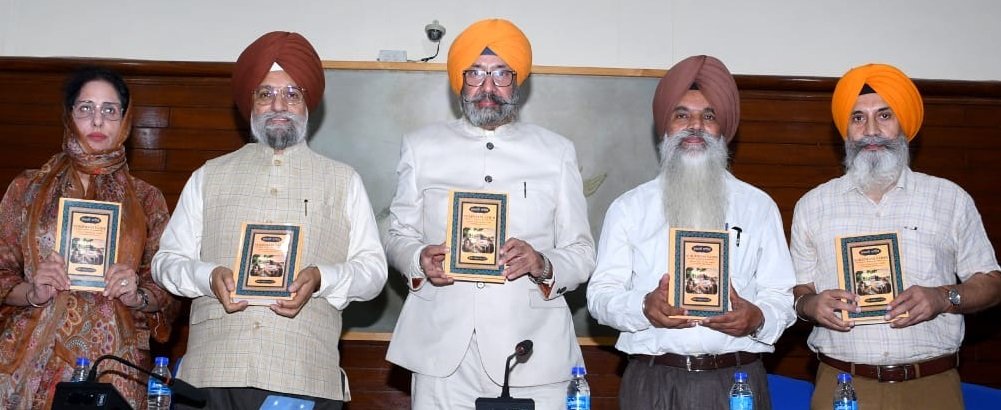
KBS Sidhu was delivering a lecture titled “Guru ki Nagri: Guru Ram Das Ji’s Amritsar at 450” at Guru Nanak Dev University. The lecture was organised by the Faculty of Humanities and Religious Studies as a major event in the year-long celebrations of the 450th foundation year of Amritsar by the fourth Nanak, Sri Guru Ram Das Ji. Prof. Karamjeet Singh, Vice-Chancellor of the University, presided.
KBS Sidhu began with the spiritual and architectural basis of the city. He explained that Guru Ram Das Ji dug the sarovar at the lowest point of a natural basin and invited traders and artisans of many callings to settle around it. Guru Bazaar and the city’s other bazaars and katras, he said, are the living record of that invitation. The Harmandir Sahib was built below the level of the town, so that every visitor goes down to it, a lesson in humility built into the ground. He took the audience through the verses of Sri Guru Granth Sahib that praise Ramdaspur and its sarovar, especially the rahau on Ang 817, “ਰਾਮ ਰਾਜ ਰਾਮਦਾਸ ਪੁਰਿ ਕੀਨੑੇ ਗੁਰਦੇਵ”, and set them alongside the two verses on Lahore.
He then traced how the fifth Guru, Sri Guru Arjan Dev Ji, carried the founder’s vision forward with the Harmandir Sahib’s four doors and the Prakash of the Aad Granth in 1604. The sixth Guru, Sri Guru Hargobind Sahib, completed the design by raising the Akal Takht beside the sarovar and setting out the doctrine of Miri and Piri.
The lecture then turned to the challenges the city has faced over four and a half centuries: Ahmad Shah Abdali’s repeated desecration of the Harmandir Sahib, the Jallianwala Bagh massacre of 1919, Partition, which turned the centre of a region into a border town, and the years of turmoil after 1984. Each time, KBS Sidhu said, the sangat answered destruction with kar sewa, and the city rebuilt itself. He also spoke of Amritsar as a shared city, with the Darbar Sahib, Jallianwala Bagh, Durgiana Tirath and Valmiki Tirath standing within a few kilometres of one another.
He described its old place as a trading hub between Kashmir, Kabul and the plains, and its present needs: clean water in the sarovar’s supply channels, an open trade route at Attari and a living walled city.
“Governments will come and go,” KBS Sidhu said. “The people who live in the Guru’s city, its professionals and its traders, must themselves take up the work of restoring it, as the sangat has done in every century.”
In his presidential address, Prof. Karamjeet Singh spoke of the qualities that set the Amritsar community apart: resilience in the face of repeated adversity, a long tradition of communal harmony, a never-say-die attitude and the spirit of Chardi Kala.Prof. Amarjit Singh, Dean, Faculty of Humanities and Religious Studies, welcomed the guests. The lecture was attended by faculty members, students and prominent citizens of Amritsar.