CALLS FOR URGENT STRENGTHENING OF ANGANWADI SYSTEM
(MOREPIC1) Face2News/New Delhi
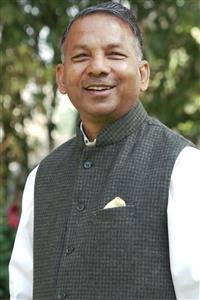
Rajya Sabha MP Padma Shri Rajinder Gupta voiced strong support for the Private Member’s Resolution moved by Smt. Sudha Murty in the Rajya Sabha, proposing the introduction of Article 21B to guarantee free and compulsory Early Childhood Care and Education (ECCE) for children aged three to six years. Describing the proposal as both timely and visionary, Gupta emphasised that over 85% of brain development occurs before the age of six, making early childhood care not just a legal provision but a scientific necessity.
Gupta highlighted that India’s Anganwadi ecosystem, which marks 50 years of service this year, has grown from 33 pilot centres in 1975 into the world’s largest early childhood network with 13.96 lakh centres. Despite this exponential growth, he noted that significant infrastructure gaps continue to affect the quality of service. Nearly 3.58 lakh Anganwadi Centres still operate from rented or inadequate spaces, while a large proportion lack essential facilities such as piped water, functional toilets, operational kitchens, and solar-powered electricity. He added that Anganwadi workers, despite having to manage more than 20 crucial responsibilities—from nutrition and immunisation to early learning and community mobilisation—are often burdened with additional duties such as election work and surveys. Strengthening this workforce, Gupta stressed, is imperative if ECCE is to become a meaningful constitutional right.
Drawing attention to two critical yet often neglected areas, the MP underscored the need for focused support for children with disabilities and those affected by rare diseases. He pointed out that India has 2.68 crore persons with disabilities, including thousands of children below six years of age who currently fall outside the legal framework that guarantees free education from the age of six onwards. Additionally, nearly 70% of rare diseases manifest in early childhood, and delays in diagnosis—often stretching from three to seven years—lead to irreversible developmental loss and heavy financial strain on families. Gupta noted that while over 25 lakh children with special needs are enrolled in schools, India has only 12,000–15,000 special educators, leaving a massive gap in early identification and intervention. He stressed that for Article 21B to be truly effective, ECCE must embed early screening, early intervention and dedicated support systems for children with disabilities and rare diseases.
Gupta also called for a comprehensive reimagining of India’s early childhood approach, drawing inspiration from global practices in Japan, Finland and Scandinavian countries where early education focuses not merely on literacy and numeracy, but on self-sufficiency, emotional regulation, empathy, cooperation and age-appropriate independence. He observed that India’s early childhood framework remains heavily adult-dependent, with tasks often done for the child rather than with the child. This, he argued, is a structural issue within the current pedagogy. As one of the world’s youngest nations, India must nurture children who are not only academically prepared but also emotionally resilient and socially confident.
Reiterating his unwavering support for the resolution, Gupta said that the introduction of Article 21B represents far more than a constitutional amendment—it signifies a national commitment to transforming the early childhood experience in India. He said the journey forward must focus on upgrading Anganwadi infrastructure, reducing administrative burdens on workers, equipping centres to support disabilities and rare diseases, expanding the cadre of trained special educators and building a holistic pedagogy that empowers children with confidence, independence and essential life skills.
Concluding his address, Gupta stated, “This resolution is not about the children of today alone. It is about the citizens of tomorrow. I strongly and unequivocally support this historic step.”