Face2News/Washington DC/ Chandigarh
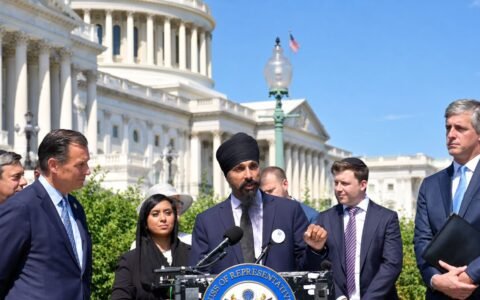
The response to the new Mecca Accord, popularly also referred to as “Islamic Nato,” should be neither one of exaggerated apprehension nor of dismissive denial, KBS Sidhu, retired IAS officer and former Special Chief Secretary, Government of Punjab, said while addressing a virtual seminar on the regional security implications of the Accord, held on 25 August 2026, EST, and organised by a leading Washington-based bipartisan think tank focused on India-U.S. relations.
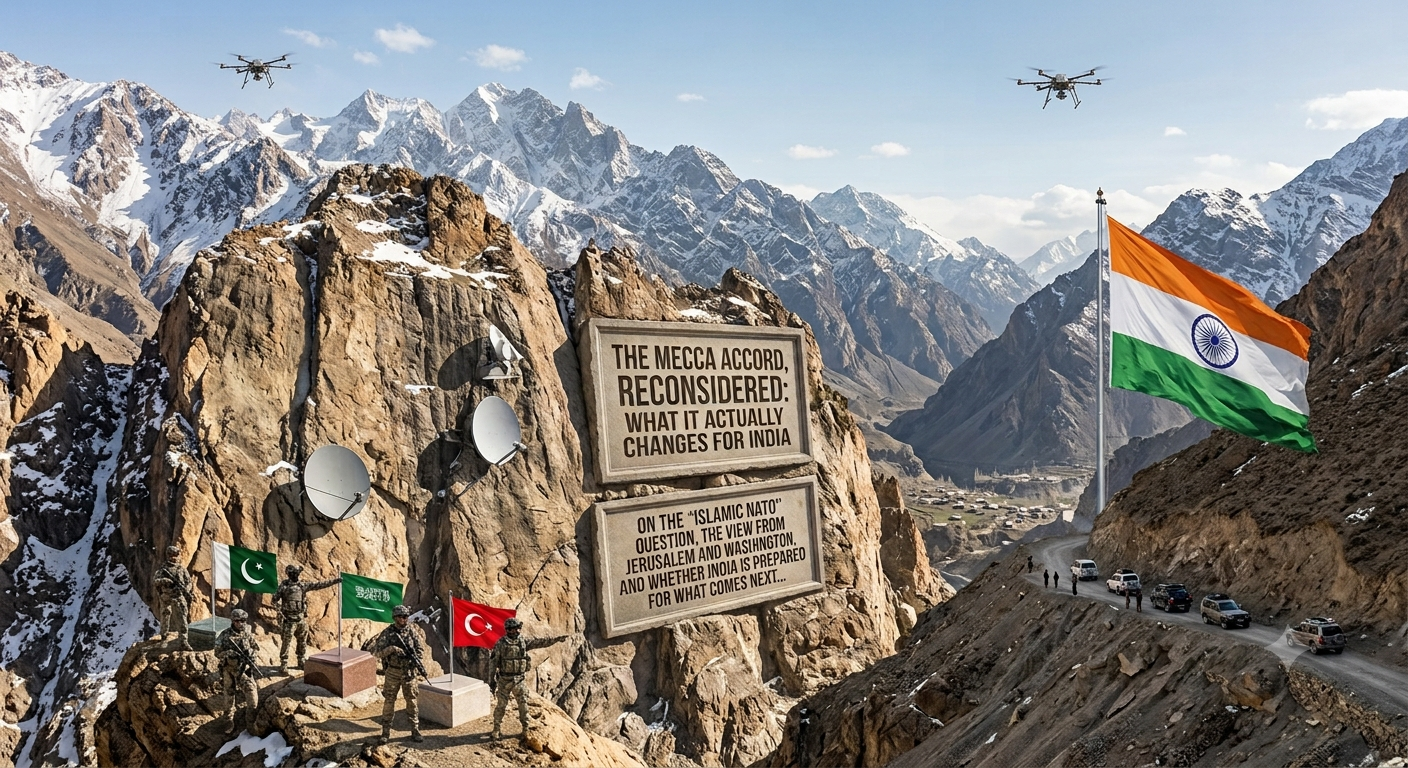
KBS Sidhu, who is also Founder-Editor of The KBS Chronicle, told a multi-disciplinary and international gathering of participants that the trilateral pact signed at Al-Safa Palace on 7 August 2026 by Saudi Crown Prince Mohammed bin Salman, Turkish President Recep Tayyip Erdoğan and Pakistani Prime Minister Shehbaz Sharif had, in the weeks since, produced commentary swinging between two equally unhelpful poles. “One camp has dismissed it as a photo-op with no teeth.
The other has reached for Cassandra-style predictions of an Islamic Nato now arrayed against India. Neither extreme survives contact with the actual text,” he said. KBS Sidhu, an alumnus of the Harvard Kennedy School of Government, also holds a Masters in Economics from the University of Manchester, UK.
On the “Islamic Nato” label itself, KBS Sidhu was direct. An alliance, he argued, is a command structure and not merely a signature: Mecca has no integrated headquarters, no Supreme Allied Commander, no standing joint staff, and no published mechanism for deciding whether a given incident even qualifies as the “armed attack” the pact promises to answer collectively. The three signatories, he noted, do not share a land border with one another, have no common operational language, and have never trained or exercised together at anything approaching Nato’s decades of integration. “What Mecca actually establishes is a political commitment with real diplomatic value to its signatories, and remarkably thin operational content. It is a symbolPakistan can invoke in its messaging, not yet a machine that produces deployed forces,” he said.
Turning to India’s own preparedness, KBS Sidhu weighed the four vectors that have featured most prominently in recent commentary — Saudi money, Turkish drones, Bangladeshi radicalisation, and Chinese hardware — and argued that each was real but none decisive on its own. He drew on the record of Operation Sindoor, India’s May 2025 campaign against terrorist infrastructure in Pakistan, to illustrate how India’s layered air-defence architecture had already performed under fire against a less diversified version of the same coalition, while also citing the Indian Chief of Defence Staff’s own public acknowledgement of early operational setbacks as a mark of institutional honesty rather than weakness.
KBS Sidhu identified two genuine gaps in Indian preparedness that deserve sustained attention: the fifth-generation fighter window that will persist until India’s own AMCA reaches operational service in the mid-2030s, even as Pakistan’s Chinese-supplied J-35 tranche begins to arrive; and a deteriorating security environment in Bangladesh, which he described as opening a second, less-defended flank precisely as attention remains fixed westward.
He also addressed the parallel diplomatic track with Beijing, noting that President Xi Jinping’s expected visit to New Delhi for the BRICS summit in September should not be read as inconsistent with continued Indian investment in air-defence capability. “There is no contradiction between hosting Xi Jinping with full ceremonial courtesy and continuing, in the same season, to expand the S-400 inventory. Trust, but verify, as President Reagan once put it, is not a contradiction — it is a discipline,” he said, drawing a parallel with India’s own experience of the Panchsheel period before 1962.
The seminar also touched on the Accord’s implications for Israel and for Washington’s own balancing act among its Gulf, Turkish, Israeli and Indian partnerships, a theme KBS Sidhu has explored at greater length in The KBS Chronicle.A written summary of the talk, along with KBS Sidhu’s full analysis, “The Mecca Accord, Reconsidered: What It Actually Changes for India,” is available on his Substack blog, The KBS Chronicle. The link to the video recording of the seminar will be shared as soon as it becomes available from the organisers.
International
Trending
RESPONSE TO MECCA ACCORD SHOULD BE NEITHER EXAGGERATED NOR DISMISSIVE: KBS SIDHU