ONE-FIFTH WITH DIABETES WOULD DEVELOP VISION THREATENING DIABETIC RETINOPATHY (VTDR), CHIRAG, A GREWAL EYE INSTITUTE INITIATIVE, CONDUCTS A PUBLIC HEALTH AWARENESS SESSION ON DIABETES & EYES
Face2News/Chandigarh
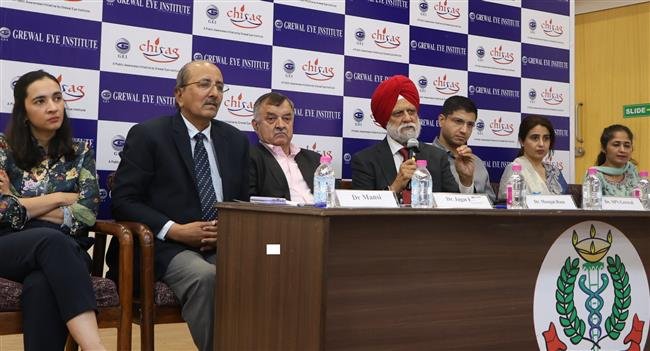
“Chirag”, a Public Health Awareness initiative of Grewal Eye Institute, Chandigarh organised an enlightening program for the public on World Diabetes Day, shedding light on crucial health aspects
The session, led by esteemed ophthalmologists from Grewal Eye Institute, Chandigarh, including Dr. Jagat Ram (former Director – PGIMER), Dr. M.R. Dogra (former Head of the Eye Department – PGIMER), and Dr. SPS Grewal (CEO – GEI). The aim of the session was to enlighten the public about the impact of diabetes on vision, leading to partial or total blindness. Emphasis was placed on the vital role of regular and comprehensive fundus examinations. First fundus examination must be done as soon as an individual is diagnosed with diabetes for the first time.
Dr. SPS. Grewal, the CEO and MD of Grewal Eye Institute, Chandigarh, initiated the program by emphasizing the pivotal role of disease awareness in transforming patients' lives. After diabetes for 25 years, practically everyone is likely to have diabetic retinopathy. The surge in diabetes in India, attributed to longer lifespans and poor lifestyle choices, was also highlighted.
Dr. Sachin Mittal, a leading endocrinologist from tricity, explained the differences between Type 1 and Type 2 diabetes, highlighting that Type 1 is rare, diagnosed before 30 years, and requiring insulin for treatment and survival. Type 2, diabetes, more common and diagnosed after 30 years, can be managed with lifestyle changes, oral drugs, or insulin.
Dr. Mangat Ram Dogra, Director of Retina Services at Grewal Eye Institute, brought attention to concerning global and Indian diabetes trends. Currently, there are 537 million adults worldwide with diabetes, and this number is expected to rise to 643 million by 2030. In India, a recent study conducted by the Madras Diabetes Research Foundation, in collaboration with ICMR and the Union Health Ministry, reveals that 101 million individuals are currently affected by diabetes.
SUBHEAD)One of the significant complications of diabetes is diabetic retinopathy, affecting about one-third of individuals with diabetes, with one-fifth developing vision-threatening diabetic retinopathy (VTDR). In India, 3 to 4.5 million patients suffer from VTDR. Alarmingly, regions like Goa (26.4%), Puducherry, and Kerala (both nearing 25%) report the highest prevalence of diabetes. Certain districts, such as Kaddapa, Thrissur, and Bilaspur, have diabetic retinopathy rates exceeding 20%, and shockingly, 90% of affected individuals in these areas have never undergone screening for diabetic retinopathy. The gravity of this health crisis is exacerbated by limited infrastructure and manpower in the country.
Dr. Jagat Ram, Director of Cornea and Cataract Services, Grewal Eye Institute further talked about “Cataract Surgery in Diabetes.” He informed the public that it is very important to control diabetes before cataract surgery to avoid complications, especially in diabetic retinopathy cases. Experienced cataract surgeons are crucial for complex procedures. Multifocal intraocular lenses are not advised for diabetic retinopathy patients. Patients should be informed about potential vision decrease post their cataract surgery, especially with moderate to severe diabetic retinopathy.
Aggressive treatment of diabetic retinopathy before and after cataract surgery, such as anti-VEGF, steroids, or laser, can enhance visual outcomes and prevent further vision loss. Prolonged and intensive post-operative care is essential.
Dr. Manpreet Brar, Dr. Mansi Sharma, Dr. Anjani Khanna and Dr. Sartaj Grewal emphasized a significant issue with diabetic retinopathy – the lack of early symptoms, leading to missed treatable stages. Sadly, 50-90% of diabetics are not examined due to insufficient awareness among physicians, ophthalmologists, and patients. General ophthalmologists sometimes overlook identifying high-risk diabetic retinopathy, contributing to an increased risk of vision loss through diagnostic errors. Addressing these awareness and diagnostic gaps is crucial to prevent permanent visual impairment.
During the event, Dr. S.D. Mehta, a leading dermatologist of tricity, shed light on the effects of diabetes on the skin. The program included multiple question-and-answer sessions, creating an interactive platform to address the audience's inquiries. This not only heightened awareness about diabetes but also emphasized its impact on various organs, particularly the eyes.
Marking Children’s Day, Dr Neha Kamble and Dr Simran discussed good eye health habits for children and helped educate the public by dispensing five common myths about eye health for children.