Face2News/Chandigarh
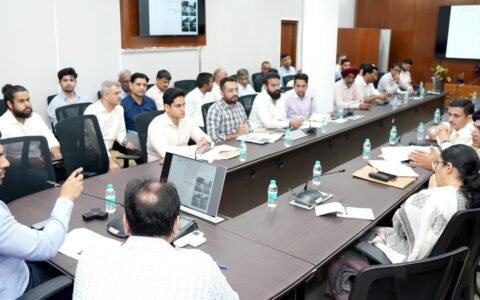
The ICSSR North-Western Regional Centre at P.U. Chandigarh organised a Research Methodology Training Programme for research scholars and faculty members.
The two-week program aimed to bridge traditional knowledge with modern research techniques.
During the valedictory address, Professor H.S. Bedi, Chancellor of the Central University of Himachal Pradesh, Dharamshala, and Council Member of the ICSSR in New Delhi, emphasised that research in social sciences is essential for adapting to the Indian knowledge system. He highlighted that the United Nations also encourages developing countries to prioritize social issues.
Professor Bedi pointed out that Indian scriptures are rich in knowledge and contain their own methodologies. He advocated for a new social model that seeks new opportunities and noted that foreign scholars are studying Indian scriptures and Vedas to enhance their skills. He stressed the importance of incorporating relevant ancient Indian research principles—such as knowledge, inquiry, and observation—into modern research. Combining traditional research techniques with insights from ancient texts like the Vedas and Upanishads can lead to positive outcomes beneficial for society.
In his presidential remarks, Professor Y.P. Verma, Registrar of P.U. Chandigarh, praised the training program's curriculum. He expressed his satisfaction that research tools typically used by scholars in the sciences are now being employed by social scientists, which signals progress for India in its goal to become ‘Viksit Bharat’ by 2047. He noted that social scientists play a crucial role in shaping society and cautioned scholars about the challenges of collecting and verifying data. He advised them to gather factual data and analyze it so that policymakers can utilize it for development initiatives.
Professor Upasna Joshi Sethi, Honorary Director of the ICSSR Regional Centre, thanked the dignitaries for their time and introduced the guests to the participants. She elaborated on the ICSSR's objectives and its role in advancing knowledge and promoting an interdisciplinary research approach. About 100 scholars from various universities and disciplines participated in the program.
She explained that the program was designed to enhance critical thinking and analytical skills among researchers and to cultivate a holistic approach to research that is profound and comprehensive. Professor Sethi emphasized the importance of blending tradition with innovation, as the ICSSR aims to nurture the next generation of scholars equipped with a diverse toolkit of ideas and methods. Participants were encouraged to reflect on the methodologies outlined in the scriptures, focusing on the principles of diligence, objectivity, and contemplation, which continue to influence contemporary intellectual discourse.
Dr. Nitin Arora, the Course Coordinator, expressed his gratitude to the participants, resource persons, and the staff of the ICSSR for their contributions. He highlighted that this training program represented a significant step forward in merging the wisdom of ancient knowledge systems with modern research techniques, fostering a generation of scholars capable of deeper thinking, critical reflection, and mindful research practices. The session concluded with the distribution of certificates to participants, who expressed their appreciation for the innovative approach that combined traditional and modern research paradigms during the training program.