Face2News/Jalandhar
New Ruby Hospital, Jalandhar, has become one of the first centres in North India to introduce the Makoto IVUS-NIRS imaging system, a cutting-edge technology designed for the early detection and management of coronary artery disease, one of the leading causes of mortality in the region and across India.
The technology has been introduced in India by Veiva Scientific, reinforcing its commitment to bringing globally advanced cardiovascular innovations to Indian clinicians and patients.
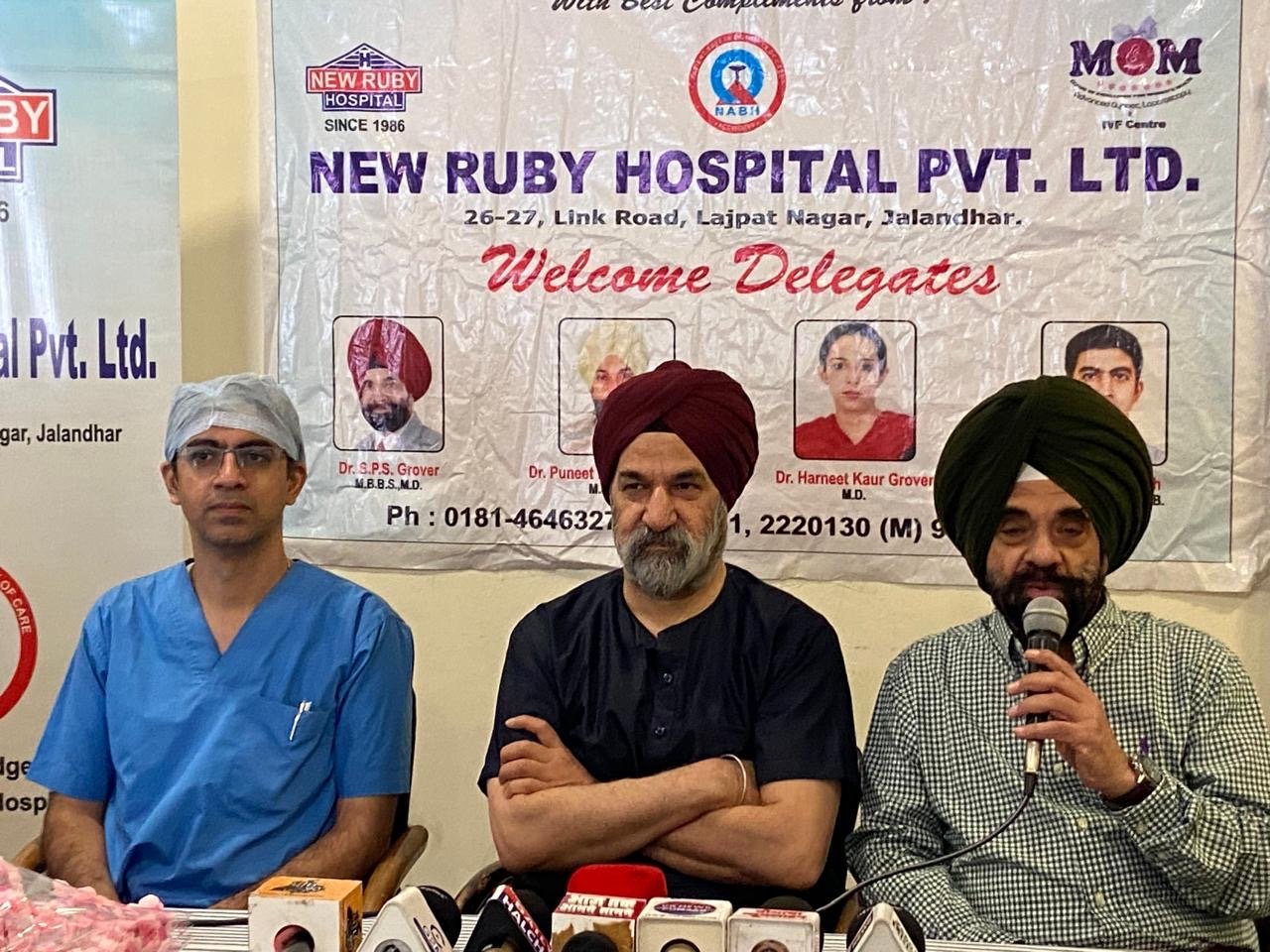
The system was launched by Dr. D. S. Chadha (Senior Intervenion Cardiologist) of Manipal Hospital, Bengaluru, in the presence of Dr. Manbir Singh(DM Cardiologist) of New Ruby Hospital, Jalandhar.
Developed by US-based medical technology company Infraredx,now Nipro Corporation, the Makoto system combines two advanced imaging modalities: Intravascular Ultrasound (IVUS) and Near-Infrared Spectroscopy (NIRS) to provide a comprehensive assessment of coronary arteries.
IVUS uses high-frequency sound waves to generate detailed cross-sectional images of the artery walls, enabling cardiologists to assess plaque burden, vessel size, and structural abnormalities with high precision. NIRS, on the other hand, analyses the chemical composition of arterial plaques and helps detect fatty (lipid-rich) plaques that are particularly vulnerable to rupture.
By integrating IVUS and NIRS, the Makoto system allows cardiologists to both visualize the artery structure and identify high-risk plaques that may not be easily detected through conventional diagnostic methods. These vulnerable plaques are often the underlying cause of sudden heart attacks, even in patients with minimal or no prior symptoms.
In his comments, Dr. Manbir Singh said, “At New Ruby Hospital, we are committed to bringing advanced healthcare technologies to our region while ensuring they remain accessible to the local community.
Speaking about the advantages of the technology, Dr. D. S. Chadha, Manipal Hospital, Bengaluru said, “This advancement is particularly important because it enables early and more precise diagnosis of coronary artery disease.
Business
Trending
NEW RUBY HOSPITAL LAUNCHES REGION’S FIRST MAKOTO IVUS-NIRS IMAGING SYSTEM FOR ADVANCED CARDIAC DIAGNOSIS