(MOREPIC1) Face2News/Chandigarh
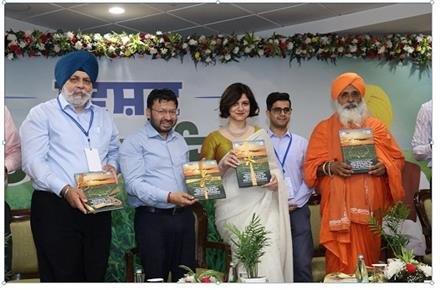
On World Environment Day, Punjab unveiled a groundbreaking report, “Pathways to Net Zero in Punjab: The Critical Role of Non-CO₂ Pollutants,” signaling a pivotal shift toward comprehensive climate action. This report, collaboratively developed by the Punjab State Council for Science & Technology (PSCST), the Institute for Governance & Sustainable Development (IGSD), and The Energy and Resources Institute (TERI), advocates a dual-pronged approach targeting short-lived climate pollutants (SLCPs) alongside traditional CO₂ mitigation.
Punjab, essential to India's agricultural and industrial output, faces significant climate risks. Between 2010 and 2023, the state experienced 128 heatwave days, including an early-season heatwave in 2022 that slashed wheat yields by up to 25% in certain districts. With all nine monitored cities surpassing national ambient air quality standards for PM2.5 in 2024, and projections suggesting a temperature rise of 2.1°C to 4.5°C by mid-century, immediate and effective action on non-CO₂ pollutants is vital.
(SUBHEAD) Dr. Ravjot Singh, Minister for Parliamentary Affairs of Punjab said: “Punjab's commitment to a clean environment is evident in our ongoing efforts, particularly in urban waste management. This comprehensive technical report, expertly prepared by IGSD and its partners, is a testament to the power of collaboration and data-driven solutions. I am extremely optimistic that its insights will translate directly into effective policies and a clear action plan, ensuring a sustainable and healthy future for all Punjabis.”
Executive Director PSCST, Er. Pritpal Singh, highlighted the practical applications of the report's findings: “This report offers Punjab a clear roadmap grounded in robust scientific analysis and practical recommendations. It identifies priority sectors and actionable interventions crucial for integrating climate action with clean air goals, ensuring informed decision-making and targeted policy implementation. Our collaborative approach has positioned Punjab to deliver meaningful reductions in non-CO₂ pollutants, setting an ambitious yet achievable standard for environmental excellence nationwide.”
Reflecting on the broader importance, Ms. Zerin Osho of IGSD said: “At IGSD, we've consistently advocated for addressing both long-term decarbonization and immediate reduction of short-lived pollutants. With severe impacts already experienced in Punjab—such as extensive heatwaves and reduced agricultural yields—immediate action becomes critical. Punjab’s integration of SLCF mitigation into its Vision 2047 roadmap and SAPCC 2.0 demonstrates leadership that can deliver significant emission reductions—potentially over 90% for methane in agriculture and up to 45% for black carbon in transport by 2047.”
Strategic Interventions Outlined in the Report Include:
Electrifying public transport and implementing comprehensive vehicle scrappage and hydrogen policies, aiming for up to 58% emission reductions in transport by 2047.
Achieving near-zero emissions from residential cooking by attaining 100% LPG adoption by 2030 (urban areas) and 2047 (rural areas).
Significantly reducing solid waste emissions through landfill closures and sustainable waste management practices such as composting, anaerobic digestion, and recycling.
Mitigating agricultural methane emissions through Direct Seeded Rice (DSR) and crop diversification, potentially cutting emissions by up to 91% by 2047.
Reducing livestock methane emissions per unit of milk produced by integrating breed and fodder management, achieving reductions of up to 52% by 2047.
Promoting the use of paddy straw-based fuel in industrial boilers to support sustainable paddy straw management and enhance farmer incomes
The report emphasizes Punjab’s readiness to leverage ongoing initiatives and implement essential policy shifts. It serves as a living document, adaptable to evolving policies, technologies, and sectoral shifts, guiding the state toward a cleaner, healthier, and more climate-resilient future.