 Face2News/Chandigarh
Second Innings Association (SIA), in a communication to Chief Architect-cum-Chairperson, Screening Committee a concerned citizen Association and stakeholder of Chandigarh submitted serious objections to the Draft Notification No. e-654249/UP/2026/5245 dated 22.05.2026 and the subsequent Addendum dated 29.05.2026 proposing extensive amendments to the Chandigarh Master Plan-2031 (CMP-2031).
At the outset, foremost and principal objection is that the proposed amendments appear to be fundamentally inconsistent with the very framework, philosophy and planning principles of the Chandigarh Master Plan-2031 itself. The CMP-2031 is not an ordinary administrative document but a carefully deliberated statutory planning framework intended to preserve Chandigarh’s planned urban character, regulate sustainable growth and maintain institutional continuity in city planning. Any amendment that substantially alters the city’s density, land-use philosophy, built form, skyline and planning discipline cannot be treated as a routine administrative exercise.
The present draft amendments appear to have been introduced without adequate due diligence, comprehensive technical assessment, demonstrable infrastructure capacity studies, independent urban planning review or meaningful public consultation. No convincing material has been placed in the public domain to establish how the proposed changes are compatible with the existing planning framework, carrying capacity, ecological sustainability and heritage character of Chandigarh. Such far-reaching structural changes cannot be justified merely through broad assertions of “progressive planning” or future urban requirements without rigorous supporting evidence and transparent scrutiny.
The se proposals, rather than supplementing CMP-2031, effectively seek to alter its foundational assumptions and planning discipline. In substance, they amount to a significant departure from the approved Master Plan and therefore deserve far deeper examination than what appears to have been undertaken.
Specific objections:
Proposed Amendments are Contrary to the Spirit and Framework of CMP-2031
The Chandigarh Master Plan-2031 was conceived as a balanced planning document aimed at preserving the city’s low-rise, low-density and sector-based planning framework while accommodating sustainable growth in a calibrated manner. The proposed amendments permitting peripheral high-rise development, substantial densification and increased fragmentation of industrial plots materially alter the core planning assumptions underlying CMP-2031.
Such transformative changes cannot be introduced through piecemeal amendments without first revisiting the entire planning rationale, carrying capacity assumptions and environmental implications upon which the Master Plan rests. If the fundamental vision of the city itself is sought to be modified, the appropriate course would be a comprehensive review of the Master Plan rather than selective amendments introduced through notifications.
Lack of Due Diligence and Transparent Planning Exercise
The proposed amendments appear to have been advanced without adequate urban impact assessment, traffic simulations, parking studies, water availability projections, sewage load calculations, environmental carrying capacity review, disaster resilience assessment or independent expert scrutiny.
No publicly available evidence has been presented to demonstrate that Chandigarh’s existing infrastructure is capable of sustaining the consequences of substantial vertical expansion and increased density. Equally absent appears to be any transparent comparative study examining whether alternate approaches to urban growth were considered.
Given the irreversible consequences of such amendments, a higher threshold of planning diligence and public accountability ought to have preceded these proposals.
Threat to Le Corbusier’s Architectural Foundation and Heritage Character : Chandigarh is internationally recognized for its unique post-independence urban design and architectural philosophy conceived by Le Corbusier and his planning team. The city’s low-rise built form, controlled skyline, open spaces and sectoral discipline are integral to its identity.
The proposal to permit high-rise and multi-storey group housing on the city’s periphery risks fundamentally disturbing the visual harmony and planned character of Chandigarh. Vertical expansion on such scale may irreversibly alter the skyline and weaken the architectural continuity envisioned in the city’s original planning concept.
While cities may evolve, such evolution must remain sensitive to their historic and planning foundations rather than undermine them.
Overburdening of Existing Urban Infrastructure
Chandigarh was designed for a finite population and carefully regulated density. The city’s infrastructure systems—including roads, parking, water supply, sewage, storm drainage and waste management—operate within designed capacities.
Unchecked densification through vertical development will inevitably place extraordinary pressure upon already stressed civic systems. Traffic congestion, parking shortages, pressure on water resources, sewage overloading and deterioration in civic quality are foreseeable outcomes requiring prior scientific examination.
Without proven augmentation of infrastructure, densification may compromise the city’s quality of life and planning efficiency.
Fragmentation of Industrial Plots and Risk of Unregulated Land Use Change : The Addendum dated 29.05.2026 permitting fragmentation of larger industrial plots in Industrial Area Phase-I and Phase-II appears particularly concerning. Industrial planning in Chandigarh has historically relied upon regulated plot sizes, controlled land use and functional zoning.
Fragmentation of plots combined with aggressive mixed-use permissibility risks opening the door to unregulated commercialization, speculative pressures and gradual erosion of industrial discipline. Once fragmented, such changes are practically irreversible and may fundamentally alter the industrial ecosystem of the city.
Short-term commercial considerations should not override long-term planning integrity.
Need for Public Participation and Transparent Hearing
Given the far-reaching consequences of the proposed amendments, public consultation should not remain a mere procedural formality. Chandigarh residents, urban planners, heritage experts, architects, environmental professionals and institutional stakeholders deserve a meaningful opportunity to present their views before irreversible decisions are taken.
A city of Chandigarh’s planning significance warrants participatory urban governance and transparent decision-making.
In view of the foregoing, Association urge the Screening Committee and Chandigarh Administration to: Recall and reconsider the proposed amendments permitting peripheral high-rise development and fragmentation of industrial plots.
Undertake a comprehensive technical, environmental and infrastructure impact assessment before contemplating any fundamental change to CMP-2031.
Place in the public domain all studies, reports and planning justifications relied upon for these proposals.
Conduct a transparent and meaningful public hearing involving urban planning experts, citizen groups and stakeholders before any final decision is taken.
Preserve the sanctity, planning philosophy and statutory integrity of Chandigarh Master Plan-2031 rather than permitting piecemeal alterations inconsistent with its original framework.
Chandigarh is not merely a city but a nationally significant planning legacy. Its carefully conceived urban form must not be altered through sweeping amendments lacking demonstrated necessity, comprehensive due diligence and broad public consensus.
Kindly acknowledge receipt of this submission and consider the objections in letter and spirit before any final action is taken.
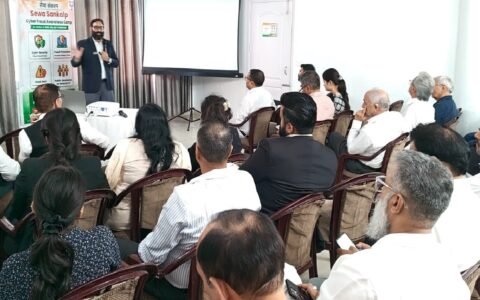
Second Innings Association urged personal hearing to the SIA members for discussion across the table
Let us protect Chandigarh’s unique heritage and fundamental vision by preserving its original architectural character, said Mr. R.K. Garg President of the Second Inning Association..