 FORMER FINANCIAL COMMISSIONER REVENUE, PUNJAB, WELCOMES THE GST COUNCIL AND INCOME-TAX REFORMS; SEEKS A SHORT AMENDMENT TO THE REVENUE RECOVERY ACT, 1890
Face2News/Chandigarh
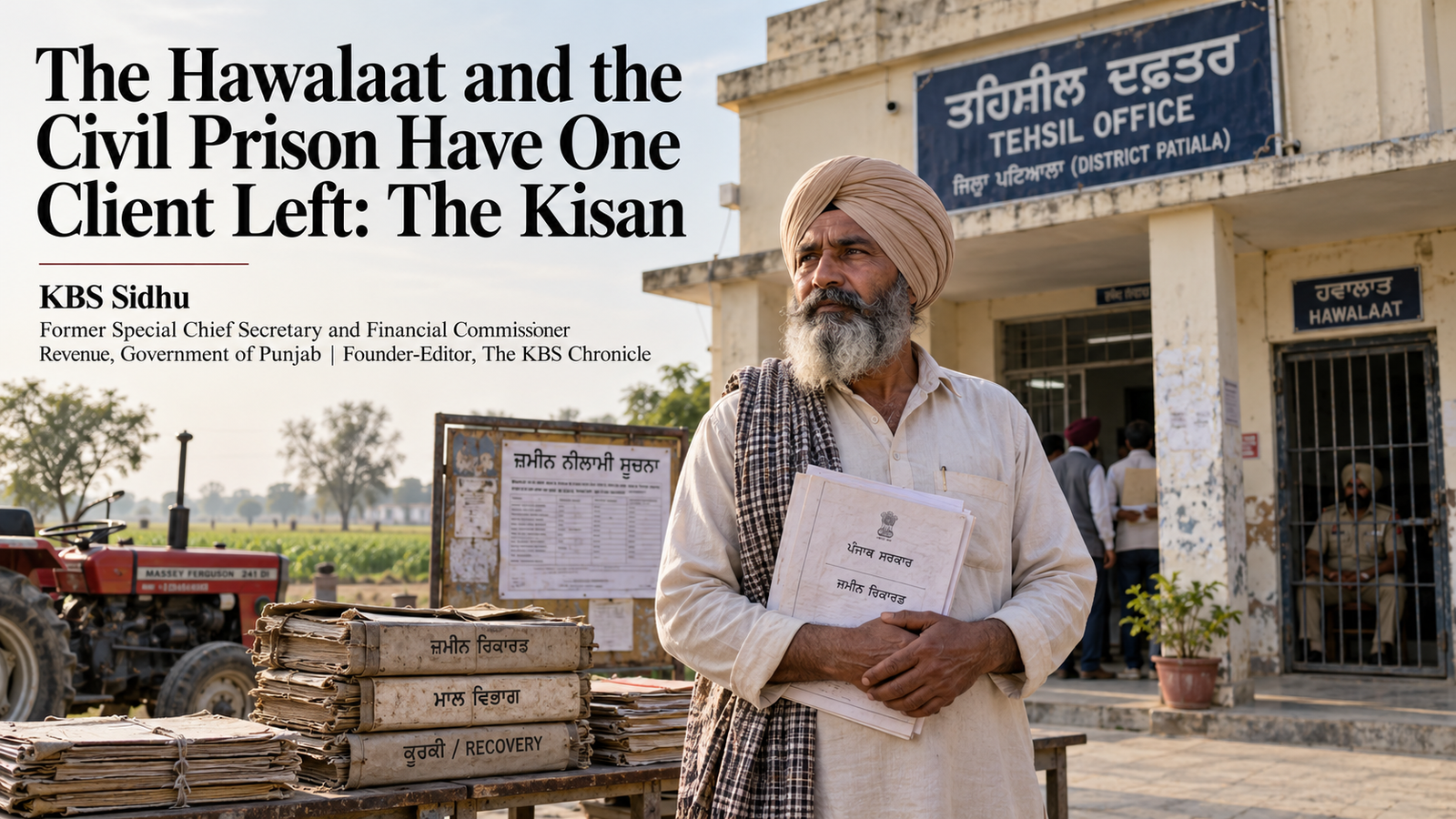
With arrest for income-tax arrears abolished and the GST Council recommending the removal of arrest under the GST law, the kisan is left as the one citizen still routinely exposed to arrest and detention for unpaid dues, and Parliament should end this across the country, KBS Sidhu, former Financial Commissioner Revenue, Punjab, said here today.
KBS Sidhu welcomed both reforms without reservation. The Central Board of Direct Taxes removed arrest and detention from the income-tax recovery rules on 17 September 2026, after Parliament had taken the power out of the Act. On 8 October 2026 the GST Council, at its 57th meeting, recommended removing the power of arrest under GST and raising the prosecution threshold from ₹1 crore to ₹5 crore.
“The State has rightly decided that it will no longer collect its dues by locking up the taxpayer or the trader. The same decision must now reach the tehsil,” KBS Sidhu said.
He pointed out that a farmer who defaults on a co-operative loan or a government advance can have the amount recovered as an arrear of land revenue. Under the Punjab Land Revenue Act, 1887, and similar laws in most States, that can mean up to ten days in the tehsil hawalaat on a revenue officer’s order and up to a month in civil prison on the Collector’s, apart from kurki and nilami (attachment and auction) of crop, cattle, tractor and land. No civil court is involved at any stage.
The power is not a dead letter, he said. In April 2022, more than 2,000 arrest warrants were issued against Punjab farmers who had defaulted on co-operative and land-development-bank loans, and were withdrawn only after an outcry.
“A question of dignity, not of dues”
KBS Sidhu said the issue was not really one of recovery. “The farmer’s land is entered in the State’s own jamabandi. It cannot be hidden or taken abroad. It can be attached and sold like the property of any taxpayer. Arrest recovers nothing. It only humiliates the farmer before his village and marks him a second-class citizen in his own Republic,” he said.
He recalled that the Supreme Court, in Jolly George Varghese v. Bank of Cochin (1980), had held that a person cannot be jailed merely because he is too poor to pay, and that the Preamble to the Constitution assures every citizen the dignity of the individual.
What he has sought
1. From Parliament: a short amendment to the Revenue Recovery Act, 1890, a Central law, providing that no person shall be arrested or detained for the recovery of any arrears, public demand or debt under any law, Central or State; that recovery shall proceed against property alone; and that a defaulter who fraudulently conceals his assets shall be dealt with by a criminal court.
2. From the Punjab Vidhan Sabha: deletion of arrest and detention from the Punjab Land Revenue Act, 1887, in the same sitting in which the State GST Act is amended to give effect to the Council’s recommendation.
3. In the interim: a standing instruction from the Financial Commissioner Revenue to all revenue officers that no warrant of arrest be issued against an agriculturist.
“I cannot think of a State government, of any party, that would rise in its Assembly to defend the arrest of a farmer for debt,” KBS Sidhu said. He urged all parties in Punjab, ahead of the 2027 election, to legislate the end of arrest, kurki and nilami instead of promising it once again in their manifestos.
KBS Sidhu served two tenures as Financial Commissioner Revenue, the highest statutory authority under the Punjab Land Revenue Act. He said that no farmer was put behind bars for default during his tenures, and that the Revenue and Cooperation Departments had instead steered one of the largest debt waiver schemes of recent times. “That was an officer’s restraint. The farmer needs the protection of a statute,” he said. (His detailed article on the subject appears in The KBS Chronicle).